How to Build a Portfolio That Gets Replies

A portfolio that gets replies is not a gallery of everything you have made. It is a short argument, built from three projects or fewer, that you can do the work someone is about to pay for. Most beginner portfolios fail because they collect instead of argue. This guide shows how to build the arguing kind: which projects to include, what each one must prove, and how to present it so a busy client replies instead of scrolling past.
Key takeaways
- Three strong projects beat ten weak ones, because reviewers skim and decide in minutes.
- Each project needs a job: prove a skill, prove you can finish, or prove you can work with real constraints.
- Every project page needs the same four things: the problem, the constraints, your process, and the outcome.
- Certificates support a portfolio; they cannot replace one, because they prove study, not work.
- A simple, fast portfolio page you control beats a polished profile on a platform you do not.
Table of contents
Why replies are the only metric
Beginners judge a portfolio by how it looks. Clients judge it by what it settles. A hiring client has one quiet question: can this person do my job without becoming my problem? Your portfolio either answers that in the first minute or it answers nothing, no matter how nice the typography is.
This is why “replies” is the right test. A portfolio is not art; it is sales evidence. Indeed describes a work portfolio as a collection of samples that supports your job search by showing what you have done, and the operative word is showing. Every choice in this guide serves that one goal: make the right stranger confident enough to write back.
Decide who the portfolio is for
Before picking projects, pick the reader. A portfolio aimed at local shops reads differently than one aimed at startups, even with identical work inside. The shop owner wants reliability and a phone number. The startup founder wants speed and a live link.
Write one sentence before you build anything: “This portfolio convinces [kind of client] that I can [kind of work].” Every later decision gets easier, because you can hold each project, each paragraph, and each screenshot against that sentence. If a piece does not move the argument, it does not ship, however proud of it you are.
The three projects you need
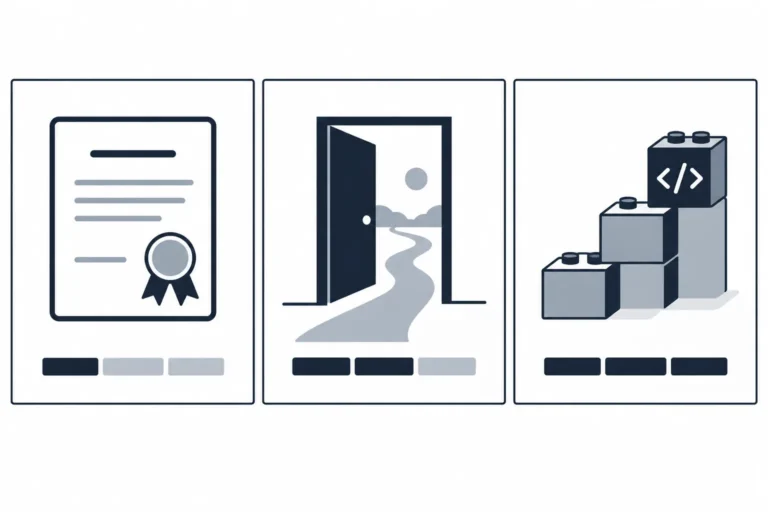
Three projects, each with a distinct job. Not three random favorites.
The first proves the skill itself. Pick the cleanest example of the exact service you want to sell: a website, a logo set, a data dashboard, an edited video. It does not need a client. It needs to be finished and good, because reviewers use it to answer “can they do the craft?”
The second proves you can finish under a brief. Build it to a spec you invent or borrow. Redesign a local cafe’s menu page. Rebuild a nonprofit’s donation flow. Automate a friend’s spreadsheet. Invented clients are fine here, and honesty matters more than pedigree, so label it as a concept project. Reviewers read something different from it: can this person follow requirements and deliver something coherent?
The third proves real-world constraints. Anything with an actual stakeholder works: a volunteer project, a student group site, a favor for a family business, a discounted first gig. The work can be rougher. The point is evidence: you have dealt with feedback, changing requirements, and a real person’s deadline. Our guide to finding your first freelance clients covers how to get that first real stakeholder if you do not have one yet.
What every project page must answer
Each project gets a short page or section. It answers four questions, in order. What was the problem? One or two sentences, framed as the client’s problem, not yours. What were the constraints: deadline, budget, tools, brand rules? Constraints are what make work believable, because unlimited briefs prove nothing. What was your process: the two or three decisions that shaped the result? And what was the outcome, stated as plainly as you can, with numbers if any exist?
Then show the work. Screenshots, links, before-and-after views, short clips. A reviewer should be able to verify your claims in under a minute, without asking you for anything. Write the text the way you would explain the project to a smart friend who has sixty seconds: specific, plain, and done.
One last test before publishing each page. Read it as the client, not the maker. Does it answer their question in the first screen? Can they see the finished thing without clicking three times? Is there any sentence that would mean nothing to a stranger? Cut that sentence. The page is not your archive; it is their shortcut to a decision.
Certificates vs proof
The backlog instinct is to add one more certificate instead of one more project. Resist it. Certificates say you studied; projects say you worked. Employer surveys summarized by the NIH’s training office put problem-solving, teamwork, and communication at the top of what hiring managers want. A certificate barely speaks to any of those. A finished project speaks to all three at once, especially with a paragraph on how you handled a broken requirement.
None of this makes certificates useless. They help when they are recent, relevant, and hard to fake. They matter more in fields that gate entry with them. But they belong in a short line near the bottom of your portfolio, never in place of the work. If you are choosing where the next ten hours go, spend them shipping a third project, not collecting a fourth badge. Our 90-day plan for learning a digital skill pairs well here, because its project weeks double as portfolio material.
How the portfolio fits your outreach
A portfolio rarely wins work by sitting there. It wins work as the destination of a short, specific message. The typical path looks like this. Your note names the client’s problem in one line, claims you have solved something like it, and links the one project that proves it. The portfolio closes; the message opens.
That flow changes how you build. Because you will link single projects, each one needs its own anchor or page you can send directly. A spot in a gallery is not enough. Different clients care about different proofs. Sometimes you lead with the skill project; sometimes the constraint project lands better. Three projects with clear jobs give you three different openers, all from the same small body of work.
Where to put your portfolio
Own the page. A simple site on your own domain loads fast and looks deliberate. It also does not surround your work with a competitor’s branding or ads for other freelancers. It does not need to be fancy. One page with your three projects, a short about line, and an obvious way to contact you is enough to start. If the domain itself is still on your list, our plain-English guide to choosing and registering a domain walks the purchase without the jargon.
Platform profiles still earn their keep as mirrors. Keep your LinkedIn and any marketplace profiles consistent with the portfolio, linking back to it. Clients often check both. Just remember which one you control. A platform can change its layout, its fees, or its rules tomorrow. Your page stays yours.
The build at a glance
| Project | What it proves | Example for a beginner |
|---|---|---|
| Skill proof | You can do the craft at a professional level | Your best finished piece, polished and complete |
| Brief proof | You can follow requirements and finish coherently | A labeled concept project built to an invented spec |
| Constraint proof | You can handle real people, feedback, and deadlines | A volunteer or discounted gig for a real stakeholder |
A realistic first week
You can assemble the skeleton in a week without heroics. Day one: write the positioning sentence and pick your three projects. Day two: buy the domain and put up a blank page with your name and a contact route. Days three and four: write the first two project pages, starting with the skill proof, because it is the easiest to describe. Day five: do the constraint project page, which takes longer because the story has people in it. On day six, read everything aloud and cut a third of the words. Day seven: send the link to three people who fit your target client and ask what confused them.
The result will not be perfect, and that is fine. A live portfolio that gets honest reactions beats a perfect draft that ships in month three. This guide is one stop on a longer path; our complete guide to digital skills for your career maps the road from first skill to steady clients.
Common mistakes
The most common mistake is volume. Ten mediocre pieces tell a reviewer you cannot tell good from okay, which is itself a verdict. Ruthless editing is a skill clients pay for, so show it. Second is hiding the work behind process jargon. Pages full of methodology diagrams and no screenshots read as avoidance. Third is the mystery portfolio. Nothing says what you want to be hired for, so nobody can picture hiring you. Say it in one line near the top. Finally, do not fake clients. Invented spec work is legitimate when labeled. Fake logos are the fastest way to end a conversation that was going well.
Quick answers
How many projects should a beginner portfolio have?
Three is the working number: one for craft, one for following a brief, one for real constraints. Fewer looks thin, and more dilutes. Add a fourth only when it is stronger than the weakest of the three it joins.
What if I have no client work at all?
Two of the three projects need no client. Use your best finished piece and a labeled concept project built to a spec. For the third, do a small free or discounted job for a real organization. The stakeholder, not the invoice, is what it proves.
Should I include school or course projects?
Only if they meet the bar your paid work would have to meet. Label them honestly. A polished course capstone can serve as skill proof. A folder of every assignment cannot. Reviewers are grading your judgment about what to show, too.
How often should I update my portfolio?
Whenever a new piece beats your weakest one, and on a light schedule otherwise. A monthly ten-minute check works: links still live, contact route still works, newest skill represented. A stale portfolio quietly claims you have stopped working, which is the one message you never want to send.
Do I need a custom website, or is a profile page enough?
Start with whichever gets you to three presented projects fastest, but aim to own your page. A simple one-page site on your own domain is cheap, fully under your control, and signals the exact self-management remote clients screen for, as covered in our guide to remote work skills employers look for.
Sources
- Indeed Career Guide: What Is a Work Portfolio? (How to Build One) (what a work portfolio is and how samples support a job search)
- NIH Office of Intramural Training and Education, summarizing the NACE Job Outlook 2025 employer survey (problem-solving, teamwork, and written communication as the top skills employers seek)





3 Comments