
What Is a Backlink? Getting Your First Ones as a New Site
Ask anyone who has launched a new website what the hardest part of SEO is, and most will give you the same answer: getting other sites to link to you. Content you can write yourself. Technical settings you can fix in an afternoon. Links, however, depend on other people choosing to reference your work, and that feels completely out of your hands when your site is three weeks old and nobody knows it exists.
The good news is that the concept is simple, the tactics that work are legal and repeatable, and every site you admire started at exactly zero. This guide explains what a backlink is, why search engines still care, and the realistic ways a new site earns its first ones. It sits inside our broader digital marketing guide, which covers the channels beyond SEO once your foundation is in place.
Quick answer: A backlink is a link from another website to yours. Search engines treat each one as a vote of confidence, so pages with more quality links usually rank higher. New sites earn their first links by asking people they already know, answering journalist queries, publishing things worth referencing, and listing themselves in the few directories that actually matter. Buying links violates Google’s spam policies and can sink a new domain before it ever ranks.
What a backlink actually is
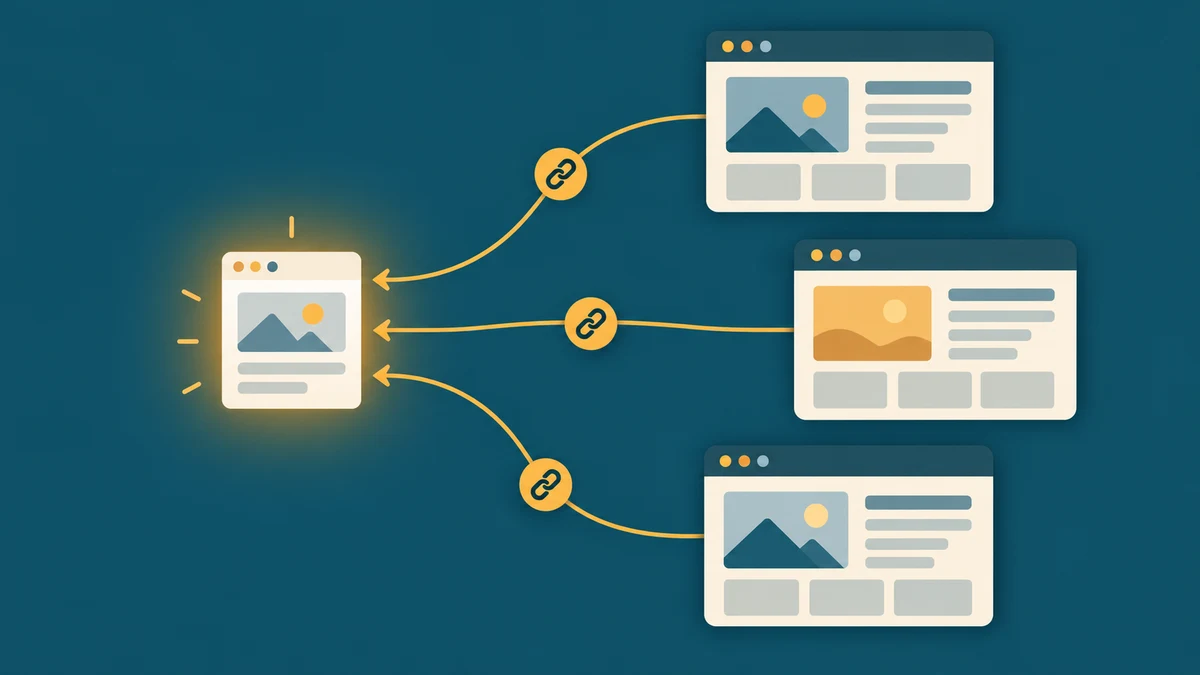
A backlink, also called an inbound link, is simply a hyperlink on someone else’s website that points to a page on yours. When a blogger references your guide, that is a backlink. When a local news site mentions your business and links the name, that is a backlink too. From your side, the link comes in; from their side, it goes out.
Three properties decide how much a link matters. First, the linking site: a link from an established, relevant publication carries far more weight than one from a site created yesterday. Second, the anchor text, which is the clickable wording of the link, because it tells Google what your page is about. Third, the link attribute: a normal link passes ranking credit, while one tagged rel=”nofollow” or rel=”sponsored” tells Google not to count it as an endorsement.
Followed versus nofollow links
Most links on the web are ordinary followed links, and those are the ones that move rankings. Nofollow links, such as most links from social media posts, blog comments, and Wikipedia, pass little to no direct ranking credit. Even so, they still send real visitors and real visibility, so a healthy profile contains both. Chasing only followed links is a mistake beginners make early and correct quickly.
One good link beats fifty weak ones
Google has said for years that link quality outweighs link quantity, and every practitioner study agrees. A single mention from a trusted site in your niche can do more than hundreds of directory entries, because the trusted site already has authority to lend. Therefore, everything in this guide optimizes for a few good links rather than a pile of empty ones.
Why backlinks still matter in 2026
Search has changed enormously, yet links remain one of the strongest ranking signals Google uses, because they are hard to fake at scale. Content can be generated in seconds now, which makes editorial endorsements from independent sites even more valuable as a trust signal. AI answer engines lean on the same authority signals, so sites with strong link profiles also get cited more often inside AI summaries.
Links also matter beyond rankings. A relevant link sends referral visitors who already care about your topic, and those visitors convert better than almost any other source. Moreover, every mention puts your name in front of a new audience, which compounds into branded searches later. If you are weighing links against paid visibility, our breakdown of SEO versus Google Ads versus Meta Ads explains where organic authority fits in the budget.
The new-site problem
Here is the honest part that most guides skip: at the beginning, you have nothing. Below is this site’s own Google Search Console Links report, captured today, showing an external link total of zero. Every site, including the ones with millions of links, has a screenshot like this in its past.

This creates a chicken-and-egg feeling: you need links to rank, but you need rankings for people to find you and link. The escape route is that your first links rarely come from search at all. They come from direct outreach, existing relationships, and being useful in public, which is exactly what the next sections cover.
The ground rules first
Before the tactics, one page of law. Google’s spam policies define link spam as any link created mainly to manipulate rankings, and they list the patterns clearly: buying or selling links for ranking purposes, excessive link exchanges, automated link-building programs, low-quality directory submissions, and advertorials that pass ranking credit. Paid links are allowed only when tagged rel=”nofollow” or rel=”sponsored”. You can read the exact wording in Google’s spam policies.
The reason to take this seriously is asymmetry. A manipulative link scheme might work for a few months, but when it unwinds, a new site has no authority cushion to fall back on. Recovery can take longer than building honestly would have. Consequently, every tactic below earns links that would survive a manual review.
Seven ways a new site earns its first links
None of these require a budget, an agency, or an existing audience. They do require effort, which is precisely why they work.
1. Ask the people who already know you
Suppliers, clients, partners, alumni networks, and friendly businesses in your space all have websites, and many have partner pages, testimonial sections, or resource lists. Offering a testimonial for a tool you genuinely use often earns a link with your name and URL attached. These are the easiest links you will ever get, because the relationship already exists.
2. Answer journalist and expert queries
Reporters constantly need quotes from people with real experience, and platforms exist to match them with sources. The best-known service, HARO, shut down in December 2024, but successors filled the gap; Qwoted, for example, offers a free account and a pool of over 130,000 vetted experts responding to source requests. A single quote in an online article usually comes with a backlink, so fifteen minutes a day on relevant queries adds up fast.
3. Write guest posts for real publications
Guest posting still works when the site has genuine readers and editorial standards, because you are trading value for exposure rather than money for a link. Pitch a specific, useful article to blogs in your niche, write it properly, and the author bio or a natural in-text mention earns you a relevant followed link. Mass guest-post marketplaces, by contrast, sit squarely in the link-spam category.
4. Publish something worth referencing
Original data is link magnet gold. Run a small survey, aggregate public numbers nobody has tabulated, or document an experiment with real results, and other writers will cite it whenever they need a statistic. This is how tiny sites earn links from huge ones: writers need sources, and being the source is a service. Our guide to keyword research for beginners helps you find the questions in your niche that nobody has answered with data yet.
5. Use the few directories that matter
Directories are not dead; only the spammy 99% are. A handful of quality listings still earn real links and real customers: your Google Business Profile if you serve locally, the major software directories if you sell a tool, and the one or two curated directories your specific industry actually reads. Submitting to hundreds of auto-approve directories is exactly the pattern Google’s spam policy names, so keep the count small and selective.
6. Reclaim unlinked mentions
People sometimes mention your brand, your product, or your content without linking it. A short, friendly email thanking them and asking for the link converts remarkably well, because the endorsement already happened and you are only asking for the clickable part. Set a Google Alert for your brand name and check it weekly.
7. Build one genuinely useful free asset
A calculator, a template, a checklist, or a small free tool earns links for years without further effort, because other writers reference it every time they answer the question it solves. Pick the one resource your niche keeps asking for and make the best free version of it. This pairs naturally with solid on-page SEO basics, so the asset itself can rank and get discovered.
What to skip entirely
To make the trade-offs concrete, here is how common tactics stack up against Google’s rules and your time:
| Tactic | Verdict | Why |
|---|---|---|
| Buying links on marketplaces | Avoid | Explicitly named as link spam; detection risks the whole domain |
| Excessive link exchanges | Avoid | Named in the spam policies; patterns are easy to spot |
| Mass directory submissions | Avoid | Low-quality directories are named as spam; near-zero value anyway |
| Guest posts on real blogs | Worth it | Real readers, editorial review, relevant followed link |
| Journalist query platforms | Worth it | Editorial links from news sites; free to start |
| Original data or free tools | Best | Earns links passively for years; impossible to replicate cheaply |
| Asking partners and suppliers | Best | Easiest legitimate links a new site can get |
How to track your links
Google Search Console is free and shows your link profile under the Links report: external links, top linking sites, and top linked pages. Verify your site, and the data appears once Google finds links to it. Checking monthly tells you which tactic is working, so you can do more of it and drop the rest.
As a bonus, the same report shows your internal links, which you fully control. Strong internal linking helps new pages rank while external links are still scarce, and our pillar digital marketing guide covers how the whole system fits together.
How long the first links take
Expect the first handful within four to eight weeks of consistent effort: a partner link here, a directory listing there, maybe a journalist quote. Meaningful ranking movement from links typically takes three to six months, because Google recrawls and reassesses on its own schedule. Patience is part of the strategy, which is why the sites that win are the ones still earning links in month twelve.
Quick answers
How many backlinks does a new site need to rank?
There is no magic number, because quality dominates quantity. A page with ten relevant links from real sites in its niche often outranks one with a thousand directory entries. Check the link profiles of the pages currently ranking for your target keyword, and treat the best of them as your benchmark rather than chasing a raw count.
Do nofollow links help at all?
Yes, just not through direct ranking credit. Nofollow links from places like social platforms, forums, and Wikipedia still send visitors, build awareness, and lead to followed links later when writers discover you through them. A natural profile contains a mix, so never turn one down.
Can I buy backlinks safely?
No. Google’s spam policies explicitly list buying or selling links for ranking purposes as link spam, and the risk lands on you, not the seller. Paid placements are legitimate only when tagged rel=”nofollow” or rel=”sponsored”, which means they pass no ranking credit by design. Spend that budget on content or tools that earn links instead.
What is anchor text and why does it matter?
Anchor text is the clickable wording of a link. It tells Google what the linked page is about, so descriptive anchors like “beginner SEO checklist” help more than “click here”. Do not obsess over exact-match anchors, though, because an unnatural pattern of identical anchors is itself a spam signal. Natural variety is the goal.
Are backlinks still important with AI answers everywhere?
Yes. AI answer engines rely on the same authority signals as classic search when choosing sources to cite, and links remain one of the clearest authority signals that exist. Sites with strong link profiles get cited in AI summaries more often, so earning links now serves both channels at once.
Sources
- Google Search Central: Spam policies for Google web search – the official definition of link spam, verified today.
- Qwoted – journalist query platform with a free tier and a vetted expert pool; successor territory after HARO’s shutdown in December 2024.
- Google Search Console Links report for guna.one – this site’s own external link count, screenshotted for this article.


