
The Complete Guide to Digital Marketing

Digital marketing has a reputation for complexity it does not deserve. Strip away the jargon and it is one loop repeated forever: put something valuable in front of the right people, watch what happens, and adjust. The tools keep changing, but that loop has not. This guide covers every major channel – search, content, email, social, and paid ads – in plain terms, shows you how to choose where to start on a small budget, and explains how to read results without drowning in dashboards. It also serves as the hub for our growing series of deeper guides on each channel.
Key takeaways
- Digital marketing is one loop: publish, measure, adjust. Channels are just different places to run it.
- Start with one channel you can sustain for six months. Consistency beats breadth every time.
- Email is the only audience you own outright. Build the list from day one.
- Paid ads buy speed, not results. Test small, measure honestly, scale only what works.
- Analytics exist to answer questions. Pick the questions first, then look at the numbers.
Table of contents
- What digital marketing actually covers
- The main channels, compared
- Where marketers are focusing now
- Choosing your first channel
- Search engine optimization basics
- Content marketing that compounds
- Email: the audience you own
- Social media without the burnout
- Paid ads on a small budget
- Measuring what matters
- A realistic plan for one person
- Common mistakes to avoid
- Where to go next
- Quick answers
- Sources
What digital marketing actually covers
Digital marketing is every way a business finds and keeps customers online. That includes being found on Google, publishing useful content, emailing people who asked to hear from you, showing up on social platforms, and paying for attention when organic reach is not enough. Offline cousins like print ads and billboards do the same jobs; the digital versions add two superpowers: precise measurement and tiny entry budgets.
The measurement part changes everything. A shop owner with a flyer never knows who read it. A shop owner with a website knows exactly how many people visited, where they came from, and what they did next. That feedback is what lets a one-person business compete with a marketing department – not bigger budgets, but faster learning. A small team that tests weekly will outlearn a big team that reviews quarterly.
The main channels, compared
| Channel | How it works | Speed to results | Main cost |
|---|---|---|---|
| SEO | Ranking pages in search results | Months, but compounding | Time and consistency |
| Content | Articles, videos, guides that attract | Slow build, long payoff | Creation effort |
| Messages to people who opted in | Fast once the list exists | Tool fees, small | |
| Social | Presence where audiences scroll | Unpredictable, bursty | Daily attention |
| Paid ads | Buying placements on search and social | Immediate, stops when you stop | Cash, ongoing |
Of course, no channel is universally best, and anyone who claims otherwise is selling something. Your best pick depends on your audience’s habits, your budget, and how quickly you need results. The sections below walk through each one.
Where marketers are focusing now
Before choosing your own path, it helps to see where the profession is heading. HubSpot’s State of Marketing report, based on a survey of more than 1,500 marketers, asked which tactics teams are betting on this year.
Two lessons stand out for a small business. First, AI-assisted work is now standard practice rather than an edge, so learning to use these tools well is table stakes. Second, SEO and content repurposing remain near the top of the list, which tells you the compounding channels still matter even in an AI-saturated feed. Chase trends with your tools, not with your strategy.
Before any channel: your foundation
Every channel in this guide eventually sends people somewhere, and that somewhere is almost always your website. So before spending a minute on marketing, make sure the destination deserves the trip: a page that loads fast, explains what you offer in one sentence, and gives visitors one obvious next step. Marketing a confusing website is pouring water into a leaking bucket.
The same logic applies to your offer itself. “I build websites” competes with a million identical claims; “I build booking websites for surf schools” competes with almost none. The sharper your offer, the cheaper every channel becomes, because the right people recognize themselves instantly. Tighten the offer first, then amplify it.
Choosing your first channel
Here is the advice most beginners need and few take: pick one channel and run it properly for six months before adding a second. A single channel done consistently produces data, habits, and an audience. Three channels done sporadically produce guilt and a content graveyard.
So choose by matching two things: where your customers already pay attention, and what kind of work you can sustain. Selling visual products to consumers? Social or visual search fits. Selling expertise to businesses? Search and email fit. If you genuinely cannot decide, default to search plus email – the pair that works for the widest range of small businesses, and the pair where your effort keeps paying after you stop working.
Search engine optimization basics
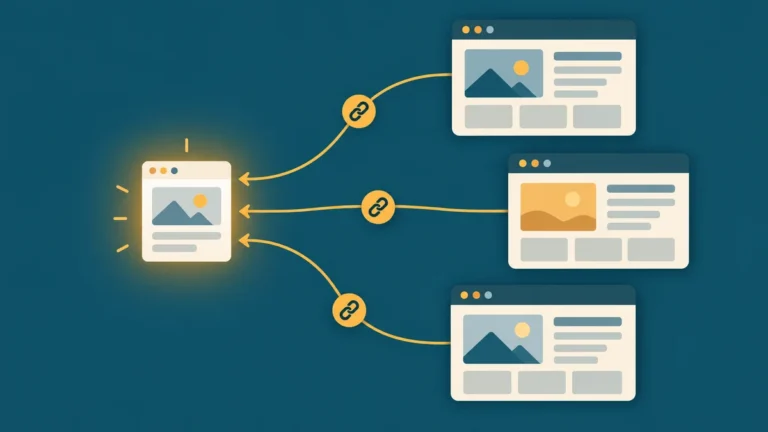
SEO is making your pages the best answer to questions people type into search engines. The work splits into three piles: technical (a fast, crawlable site), on-page (pages that genuinely answer a specific query), and authority (other sites linking to you). Beginners should ignore 90% of SEO discourse and do three things: publish pages that each target one real question, make those pages the most useful answer available, and keep the site fast and clean.
Results take months, which is precisely why SEO is worth it: most competitors quit at month three. We go deep on the paid-versus-organic trade-off in our SEO vs Google Ads vs Meta ads comparison, which helps you decide where your first marketing dollars belong.
Content marketing that compounds
Content marketing means attracting customers by being useful before you ask for anything: guides, comparisons, videos, templates. The economics are unusual – a great article costs the same effort whether ten people or ten thousand read it, and it keeps working for years. That is why content is the default engine for small teams with more time than money.
However, the catch is consistency. A burst of ten posts followed by silence teaches both Google and your audience that you have left. So build a schedule you can actually keep – for most solo operators, that is one solid piece a week. Our content calendar guide for one-person businesses turns that rhythm into a system that survives busy weeks.
Email: the audience you own
Every other audience is borrowed. Google can change an algorithm, a social platform can throttle your reach, but your email list is yours – a direct line to people who raised their hands. Email also converts better than almost anything else because the reader already knows you.
So start collecting addresses from your first day, even before you have anything to sell, and send something useful on a regular schedule. The mechanics – choosing a tool, writing a welcome sequence, staying out of spam folders – are all covered in our email marketing guide for small businesses.
Social media without the burnout
Social media rewards presence, which makes it the most demanding channel for a solo operator. Therefore, the sustainable version looks like this: one primary platform where your audience actually lives, a posting rhythm you can keep, and content repurposed from your other work rather than invented fresh each day. Resist the urge to be everywhere; an abandoned profile looks worse than no profile.
Also keep perspective on what social is for. For most small businesses it is a discovery layer that feeds people toward your site and list – not a place where sales happen directly. Measure it that way and the pressure drops. And when a platform changes its algorithm and your reach halves overnight, you will be glad the list and the site – the parts you own – kept growing underneath.
Paid ads on a small budget
Paid advertising is renting attention with a meter running. Its gift is speed: you can have visitors this afternoon. Its trap is the same speed, because money leaves just as fast while you learn. So the safe on-ramp is a small daily budget aimed at one clear offer, run for two weeks, then judged on actual conversions rather than clicks or impressions.
For example, search ads catch people already looking for what you sell; social ads interrupt people who were not. That difference shapes everything from targeting to creative, and choosing wrong is the most expensive beginner mistake. The full trade-off table lives in our channel comparison guide.
Simple testing that anyone can run
Marketing advice conflicts because contexts differ, so the only trusted answer is your own test. Testing sounds technical but the core habit is simple: change one thing, keep everything else the same, and compare results. Try two subject lines on your next email and send each to half your list. Write two versions of your homepage headline and run each for a month. Note what happened, keep the winner, and test again.
The discipline that makes this work is writing down your prediction before the test runs. Without a prediction, every result can be rationalized, and you learn nothing. With one, even a failed test teaches you something concrete about your audience, and a year of small tests quietly builds an advantage no competitor can copy from the outside.
Measuring what matters
Analytics tools produce thousands of numbers, and beginners drown in them. Therefore, decide the three questions you care about, then find only the numbers that answer them. For most small sites the questions are: where do visitors come from, which pages hold them, and do they take the action I want.
| Channel | The metric to watch first | Healthy sign |
|---|---|---|
| SEO | Organic visitors per month | Steady upward trend |
| Open and click rates | Stable or rising engagement | |
| Social | Clicks through to your site | Traffic, not just likes |
| Paid ads | Cost per conversion | Below what a sale earns you |
Everything else is vanity until those three are healthy. Google Analytics can answer all of them once you know where to look, and our plain-English Google Analytics guide shows exactly which reports matter and which you can ignore.
A realistic plan for one person
Pulling it together, a sane first year looks like this. Months one and two: set up the website, install analytics, and start the email list. During months three to six, publish one quality piece a week aimed at real search questions, and send the list something useful twice a month. In months seven to twelve, keep the rhythm, repurpose your best content onto one social platform, and run one small ad experiment against your best-performing offer.
Notice what is absent: daily posting, five platforms, funnel software. Those come later, funded by results rather than hope. Simple beats ambitious every single time, especially at the start.
One budget note that surprises beginners: for the first six months, your marketing budget can be nearly zero. Hosting, an email tool, and your own hours cover the whole plan above. Paid tools and ads become worth their cost only after the basics produce something worth amplifying, so resist buying the “pro” version of anything until a free tier has genuinely become the bottleneck. When that day comes, you will know exactly which feature you are paying for and why, which is the only good reason to upgrade any tool.
Using AI tools without sounding like everyone else
AI writing and design tools are now part of nearly every marketing workflow, as the survey data above shows. Used well, they handle the slow parts: first drafts, keyword lists, resizing graphics, summarizing research. Used lazily, they produce the same beige content as everyone else’s, and audiences have learned to smell it.
The working rule: let AI draft, then make it yours. Add the example only you have, the opinion you actually hold, the number from your own business. That layer of specific, human detail is what makes content worth reading, and it is the part no tool can supply for you.
Common mistakes to avoid
- Starting five channels at once. Breadth without consistency is just noise. One channel, six months, real data.
- Buying ads before the offer converts. Ads amplify what exists. Traffic to a page that does not convert is money into a shredder.
- Chasing follower counts. Ten thousand followers who never buy lose to a five-hundred-person email list that does.
- Measuring everything, deciding nothing. Analytics is for answering questions. No question, no dashboard time.
- Copying big-brand tactics. Their budgets buy forgiveness yours does not. Steal their clarity, not their spend.
- Quitting SEO at month three. The compounding curve starts right where most people stop.
Where to go next
This guide is the hub of our digital marketing series. Each article below takes one channel deep, and new ones join as they publish.
- SEO vs Google Ads vs Meta Ads – where your first marketing dollars belong.
- Email Marketing for Small Business – the audience you own, from zero.
- From Zero to 100 Email Subscribers – the 90-day plan for a list that starts at zero.
- A Content Calendar for a One-Person Business – consistency without burnout.
- How to Read Google Analytics – the few reports that answer real questions.
- On-Page SEO Basics: Optimizing a Blog Post Step by Step – the per-post routine that makes every article findable.
- Keyword Research for Beginners: Finding Low-Competition Topics – the free workflow for topics a new site can win.
- What Is a Backlink? Getting Your First Ones as a New Site – earning your first links without buying them.
- Social Media Marketing for Beginners: Pick Your One Channel – pick one platform with real data, then work it for 90 days.
Coming soon to this series: a starter guide to Google Ads, email automation beyond the welcome message, and conversion rate basics. This page will link to each one as it publishes.
Quick answers
Can I do digital marketing with no budget at all?
Yes, if you pay in time instead. SEO, content, email, and organic social all run on effort rather than cash. Expect slower results, and expect to invest ten-plus hours a week to make one channel move.
How long until digital marketing shows results?
Paid ads: days. Email to an existing list: weeks. SEO and content: three to six months for real traction, then compounding. Plan your cash flow around those timelines, not around hope.
Which single channel should a total beginner start with?
If forced to pick one: content aimed at search, with an email list attached. It costs little, teaches you everything about your audience, and keeps working while you sleep. Add paid ads only after something converts on its own.
Do I need to be on every social platform?
No – one platform where your customers genuinely spend time beats five neglected profiles. An abandoned account signals a closed business to anyone who finds it.
Is email marketing still worth it in 2026?
More than ever. It is the one channel no algorithm can take away, it converts better than social for most businesses, and the tooling for a small list costs almost nothing.
When should I hire someone to do this for me?
When you can describe exactly what works already and need more of it faster. Hiring before you understand your own funnel usually buys expensive confusion, because you cannot brief or judge what you have never done.
Sources
- HubSpot: State of Marketing Report (survey of 1,500+ marketers: AI-personalized content 48.6%, automation 47.4%, brand-values content 46.8%, updating SEO 40.6%, repurposing content 35.1% – checked November 2026)
- U.S. Small Business Administration: Marketing and Sales (fundamentals of building a marketing plan for a small business)




5 Comments