Social Media Marketing for Beginners: Pick Your One Channel
Open any marketing advice forum and you will find the same beginner question. Should I be on Instagram, TikTok, YouTube, Facebook, X, LinkedIn, or all of them at once? The honest answer is that social media marketing for beginners works best when you pick exactly one channel and ignore the rest for a while. That sounds wrong, because every platform is full of people. But spreading a beginner’s limited time across six feeds produces six weak presences, and six weak presences lose to one strong one every time. This guide helps you choose that one channel with real data, then shows you how to work it properly.
Why “be everywhere” is bad advice
The logic of being everywhere seems safe. More platforms means more chances to be discovered, right? In practice, each platform rewards a different skill, format and posting rhythm. A beginner who signs up for all of them spends the week reformatting content instead of making it. Quality drops, consistency breaks, and the algorithms notice before the humans do.
There is also a focus cost that nobody mentions. Every platform has its own analytics tab to check, its own trends to chase and its own comments to answer. For a solo beginner, each extra channel is not one more opportunity. It is one more job. Starting with one channel lets you learn the full loop of social media marketing first: plan, publish, read results, adjust. You can duplicate that loop later.
None of this means you stay on one channel forever. It means you earn the right to expand by proving you can keep one audience engaged first. That is exactly how the brands you admire actually started.
How big the audience really is
The opportunity behind social media is not hype. According to DataReportal’s global social media statistics page, there were 5.81 billion social media “user identities” around the world at the start of October 2026. That means close to 7 in 10 people on Earth now use social media each month. The same analysis puts social media use at 94.5% of the world’s internet users, with 151 million new identities added over the past year.
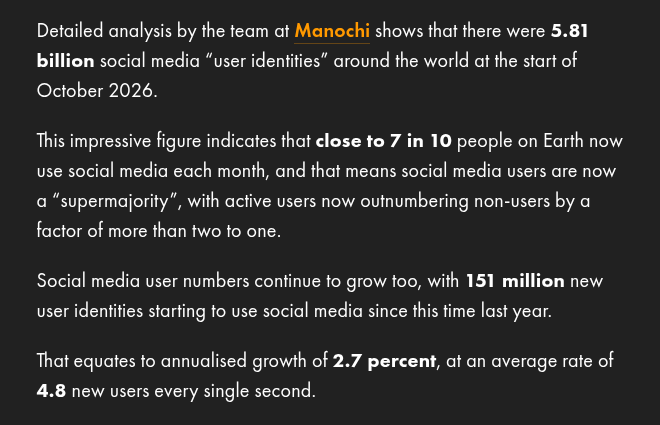
One honest caveat from the same source: these figures count user identities rather than unique people, and each data provider measures differently. So there is no single definitive answer to which platform is “most used”. Treat every ranking below as a well-sourced guide, not gospel, and let your own audience data make the final call.
The three questions that pick your channel
Choosing a channel is a matching exercise, not a popularity contest. Answer these three questions honestly, and the right platform usually picks itself.
| Question | What you are checking | If the answer points this way |
|---|---|---|
| Where is my audience? | Which platform your buyers already use daily | Broad consumer reach: Facebook or YouTube. Visual lifestyle buyers: Instagram or TikTok. Professionals: LinkedIn |
| What content can I make? | Formats you can produce weekly for a year | Comfortable on camera: YouTube or TikTok. Better with words and photos: Instagram, Facebook or LinkedIn |
| What is my capacity? | Hours per week, honestly counted | Under five hours: one simple format on one platform, done well, beats any ambitious mix |
Notice what is missing from the table: which platform is biggest. Size only matters after the three matches line up. A smaller platform where your buyers actually shop will outperform a giant one where they only scroll.
What the data says about each platform
For a global read, the GWI survey data behind DataReportal’s analysis, covering Q2 2026, found Facebook is still the world’s most widely used platform. 58.1% of adult internet users aged 16 and over said they used Facebook in the past month. That reach makes Facebook the default answer for broad consumer audiences, local businesses and communities.
Pew Research Center’s social media fact sheet adds texture from the United States. There, YouTube and Facebook are the most widely used platforms among adults, about half of adults use Instagram, and smaller shares use TikTok, Reddit, Snapchat and X. The pattern repeats in most markets. YouTube and Facebook give you scale, Instagram and TikTok give you engaged niches, and the rest serve specific communities.
Now translate that into a beginner’s choice. If you sell to a broad audience and can post video or images, start on Facebook. If your product is visual and your buyers are younger, start on Instagram or TikTok. If you teach, review or demonstrate, YouTube’s search traffic keeps working for years. The channel-by-channel budget picture, including paid options, is in our comparison of SEO, Google Ads and Meta Ads.
Your first 30 days on one channel
Month one has one goal: build a repeatable rhythm, not go viral. A simple plan that works is three posts a week on your chosen channel, built from one repeatable format you can produce without stress. For example, a beginner baker on Instagram might do one recipe photo, one short process clip and one customer result each week. (That bakery is an invented example, used to show the rhythm, not a real business.)
Track only two numbers during the month. The first is how consistently you published. The second is which posts earned the most saves, shares or replies. Saves and shares matter more than likes, because they signal real usefulness. After 30 days, double down on the format that worked and drop the one that did not. That feedback loop, repeated monthly, is the entire engine of organic growth.
If growth stalls and you are tempted by ads, the SEO, Google Ads and Meta Ads comparison linked above is the place to start. A small test budget should amplify proven posts, not pay to discover what your audience ignores.
Beginner traps that waste the first year
The first trap is chasing follower counts. Ten thousand disengaged followers sell less than five hundred people who actually want your product, so optimize for replies, saves and clicks, not the number on your profile. The second trap is copying big-brand content. Large accounts win with budgets and production teams you do not have, while small accounts win with personality and specificity, which you do have.
The third trap is posting only when you feel inspired. Algorithms reward predictable activity, and audiences forget silent accounts within weeks. A simple weekly schedule you actually keep beats a burst of ten posts followed by silence. The fourth trap is deleting or abandoning the channel after one slow month. Organic social compounds slowly, and most accounts that “failed” simply quit before the compounding started.
Notice that none of these traps are about talent or luck. They are all process mistakes, and process mistakes are the ones you can fix this week.
What good looks like after 90 days
Set expectations before you start, because unrealistic timelines kill more channels than bad content. After 90 days of consistent posting, a healthy beginner channel usually shows three signs. Your publishing rhythm feels routine instead of stressful. You know which one or two formats earn the most saves and shares. And a small but real group of people recognizes your name in their feed.
Those signs might look modest next to the screenshots gurus post online. Ignore the screenshots. A channel with fifty true fans who comment every week is worth more than a silent audience of thousands, because true fans reply, share and buy. Everything that comes later, from email signups to first sales, grows out of that small engaged core.
What you should not expect yet is meaningful revenue or viral reach. Those come after the foundation, and the foundation is exactly what months one to three are for. Judge the first quarter by learning and consistency, and the numbers will have something solid to grow from.
Expanding to a second channel, the smart way
Once your first channel runs smoothly for a quarter or two, expansion becomes a process instead of a gamble. The trick is repurposing with intent, not copy-pasting. A YouTube tutorial can become three short TikTok clips. An Instagram carousel can become a LinkedIn text post. You adapt the core idea to the new platform’s native format instead of dumping the same file everywhere.
Timing matters more than format, though. Expand only when two things are true. Your first channel publishes on schedule without heroic effort, and you can name the format your audience loves most. If either is missing, a second channel will divide a fragile routine rather than multiply a working one. Patience here is not caution; it is strategy.
One practical note before you duplicate anything. Keep your audience research separate for each platform, because the same person behaves differently in different apps. The follower who watches your ten-minute YouTube tutorial wants a fifteen-second tip on TikTok, not a compressed lecture. Respect the room you are in, and each channel will reward you in its own way.
Build the safety net next to your channel
Social platforms are rented land. Algorithms change, reach drops and accounts get restricted. The smartest thing a beginner can do is move interested followers somewhere you own. An email list is the classic answer, because no algorithm sits between you and a subscriber’s inbox. Start collecting emails from day one, even if the list grows slowly.
Our guide on going from zero to 100 email subscribers walks through that first stage step by step. And the complete digital marketing guide shows how social, email and search fit into one system. Pick your one channel today, work it for 90 days, and let the data decide what you add next. The fear of missing out is a worse strategist than your own numbers.
Quick answers
Which social media platform is best for beginners?
The best platform is the one where your buyers already spend time and whose content format you can produce consistently. For broad consumer reach, Facebook and YouTube are the safest defaults. For visual products and younger audiences, Instagram or TikTok usually fit better.
Should a beginner be on every platform at once?
No. Each platform demands its own format, rhythm and community management, so spreading thin produces weak results everywhere. Master one channel for at least 90 days, then expand only when the first runs smoothly.
How many people actually use social media?
DataReportal counted 5.81 billion social media user identities worldwide at the start of October 2026. That is close to 7 in 10 people on Earth, and 94.5% of internet users. The audience is there; your job is to reach the right slice of it.
How often should a beginner post?
Two to three quality posts per week on one channel beats daily low-effort posts on five. Pick a rhythm you can sustain for a year, because consistency is what both algorithms and audiences reward over time.
When should a beginner spend money on social ads?
Only after organic posting shows which content resonates, usually after the first one to three months. Then a small, capped test budget amplifies proven posts instead of paying to discover what your audience ignores.
Sources
- DataReportal: Global social media statistics – 5.81 billion user identities, 7-in-10 and 94.5% figures, and the GWI Q2 2026 Facebook finding, verified today.
- Pew Research Center: Social Media Fact Sheet – YouTube, Facebook and Instagram reach among US adults, verified today.